Decoding the digital age
The Rise and Fall of Ashes of Creation
Steven Sharif wanted Ashes of Creation to be the next great MMORPG. After years of development and paid testing, Intrepid Studios closed just weeks after the game's release. What went wrong?

Gaming
The Rise and Fall of Ashes of Creation
Steven Sharif wanted Ashes of Creation to be the next great MMORPG. After years of development and paid testing, Intrepid Studios closed just weeks after the game’s release. What went wrong?
Image: Intrepid Studios
In a Word...
- Ashes of Creation attracted almost 20,000 Kickstarter backers with its promise of a fantasy world shaped by players.
- Years of testing demonstrated real progress, but delays, monetisation and questions about readiness repeatedly divided its audience.
- Its December 2025 Steam release brought an unfinished alpha to a wider paying public. Weeks later, the studio closed.
- The subsequent fallout revealed a contested history of borrowing, changing control and allegations that remain unresolved.
On 11 December 2025, Ashes of Creation arrived on Steam. Almost nine years after its announcement, the fantasy MMO was finally reaching a wider audience through one of PC gaming’s largest storefronts.
Excited players paid $50 to access an immersive world that promised to grow and change around them. What they received, however, was still an alpha build, with widespread bugs and much of its ambitious design unfinished.
Within weeks, Intrepid Studios, the company behind the game, closed. Co-founder Steven Sharif publicly announced his resignation, senior colleagues departed, and staff lost their jobs.
The collapse brought a bitter dispute over financing and ownership into public view, revealing a struggle behind the scenes of a project long associated with its founder’s personal wealth.
To understand what happened, we begin with the game supporters saw taking shape, before turning to the battle over the company building it.
Steven Sharif’s Pitch for a Different MMO
Sharif’s original proposition was unusually personal. He presented himself as a committed MMO player who said he had the private financial resources to build the game he wanted to play, supported by experienced developers rather than constrained by a conventional publisher.
In a 2017 interview, he described joining nutritional-products business XanGo at 18, building a successful website selling its products, then moving into investments and property. Those later activities, he said, accounted for most of his financial success. He estimated that a viable version of Ashes of Creation would cost roughly $30 million, which he would personally fund. From the start, he presented crowdfunding as money to expand the scope rather than to serve as the foundation of the entire budget.
For readers familiar with the prolonged crowdfunding of Star Citizen, Sharif’s promise of substantial personal backing offered an apparent distinction: Kickstarter would supplement the development budget rather than underpin it.
Intrepid’s early promotional material highlighted staff with experience on games including EverQuest and Star Wars Galaxies. The combination offered a persuasive story: a wealthy enthusiast would supply commitment and backing, while industry veterans supplied the expertise.
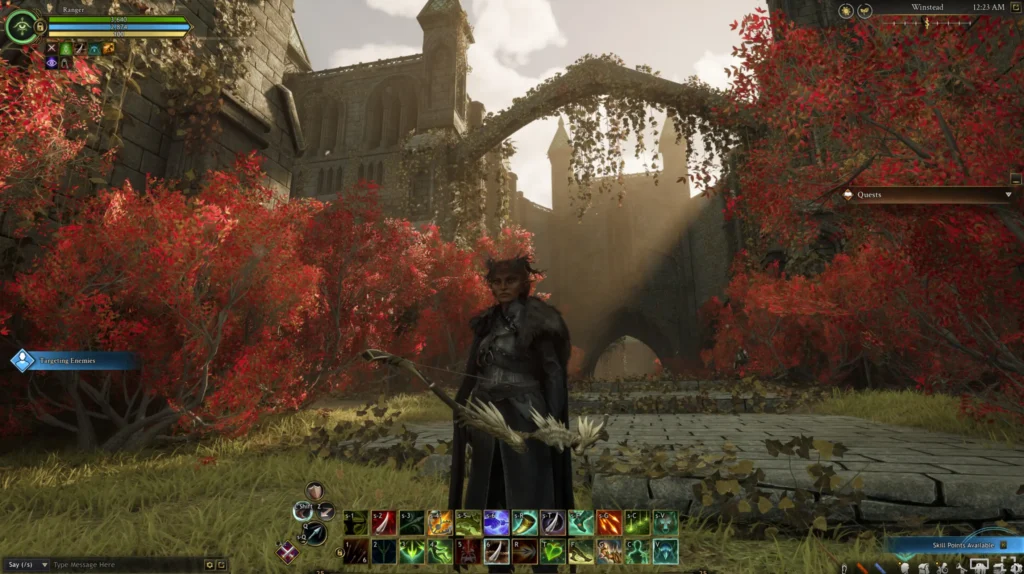
The game itself gave prospective supporters something substantial to imagine. Ashes of Creation was a massively multiplayer online role-playing game, or MMORPG. Players would explore, fight monsters, trade and develop their characters. Although this is familiar territory, the game promised something genuinely original: for players, their activities and actions would change the world around them.
The Node System: Innovation
Under a proposed 'node' system, activity within an area would help settlements grow from camps into villages and eventually metropolises. Growth would unlock opportunities, while attacks could destroy what players had built. Regional markets would encourage trade, with caravans carrying goods vulnerable to ambush. Castles would give guilds political and territorial interests to defend.
Rather than simply accumulating better equipment, players would have a stake in their surroundings. The fate of a caravan or home settlement could matter because friends, resources and shared effort were involved.
The Kickstarter campaign launched by the studio clearly demonstrated appetite for such a concept. Between May and June 2017, 19,576 backers pledged $3,271,809 against a $750,000 target. Intrepid now had a substantial audience waiting for its world to take shape.
Ashes of Creation: Timeline
| Date | Event | What Happened |
|---|---|---|
| 2015 | Intrepid Studios is founded | Steven Sharif co-founds Intrepid, pitching Ashes of Creation as an ambitious MMO supported by his personal resources. |
| 2017 | Kickstarter raises $3.27 million | Almost 20,000 backers support a fantasy world shaped by players through settlements, trade and conflict. |
| 2018–2020 | Apocalypse divides supporters | A standalone battle royale tests MMO technology but raises questions about development priorities. Its servers close in March 2020. |
| 2021 | Alpha One opens the MMO to testing | Players test an early MMO build. Intrepid later announces its move to Unreal Engine 5. |
| 2024 | Alpha Two pricing prompts criticism | Testing bundles cost $100–$120. After criticism, Intrepid adds benefits and defends the charges as covering testing infrastructure. |
| November 2025 | Steam plans raise concerns | A December Early Access release is announced. Supporters question whether the alpha is ready for a wider audience. |
| 11 December 2025 | Steam Early Access begins | The $50 release encounters technical problems and mixed reactions, with much of the promised experience still unfinished. |
| January 2026 | Reassurances give way to closure | Reassurances give way to leadership departures and mass layoffs. Sharif publicly announces his resignation on 31 January. |
| February–March 2026 | The financial dispute becomes public | Investors allege misconduct; Sharif alleges an improper asset seizure attempt. Competing accounts expose disputes over financing and control. |
| 27 August 2026 | A limited receiver is appointed | A court appoints a receiver to protect assets, examine secured debt and oversee any foreclosure sale. Responsibility remains disputed. |
Early Questions About Funding and Referrals
This early enthusiasm was accompanied by scrutiny. Sharif’s background in multi-level marketing attracted questions about his business experience and the way Ashes of Creation was being promoted. He defended XanGo as a business focused on selling products, and rejected the implication that his involvement somehow made the game untrustworthy.
However, a referral programme launched by Intrepid gave that discussion particular relevance. Under the scheme, Intrepid offered participants 15% of the value of purchases made by players they referred, with rewards described as store credit, subscription time or real cash. Sharif defended the arrangement as an affiliate programme that could direct marketing expenditure towards the community.
In June 2017, PC Gamer reported that Kickstarter considered including pledges in the scheme a breach of its policies. Kickstarter said Intrepid had agreed to exclude those pledges, but subsequently acknowledged that this had not happened. It nevertheless declined to act against the campaign, citing potential misunderstanding and changes to how the scheme was presented.
Referral rewards are not inherently improper. Such programmes can help a small studio attract customers. But earning money from other players’ purchases also created a potential conflict of interest in which participants are disincentivised from criticising or acknowledging genuine flaws in the game.
Sharif offered reassurance on another front. During the Kickstarter, he told PC Gamer that reserves would be available to refund supporters if the project appeared unlikely to launch. Notably, the publication warned readers against treating that assurance as a guarantee.
The campaign therefore ended with considerable support but also questions about its commercial arrangements. Those questions would persist as supporters waited to see what Intrepid could deliver.
Why Apocalypse Divided Supporters
In December 2018, Intrepid opened testing of Ashes of Creation: Apocalypse, a standalone battle royale-style gaming environment. This came as something of a shock to supporters as the main mechanic was for players to enter combat encounters rather than developing settlements, establishing trading relationships or participating in a persistent society.
Intrepid’s explanation was that a narrower game could test combat and infrastructure needed by the MMORPG. There was a practical rationale: finding problems in a smaller environment could help before attempting much larger battles. But for supporters waiting for Ashes of Creation, a battle royale also raised an obvious question. Why was the studio releasing a different kind of game while the promised MMO remained unavailable?
By March 2019, this testing phase appeared to have impacted the main project. Sharif announced that Alpha One would miss its target, with further work required on performance, networking and preparations for large castle sieges. No replacement date had been settled.
This was an early demonstration of the difficulty behind the attractive design. A settlement could look convincing in a presentation; battles involving large numbers of players required the underlying systems to remain responsive under pressure. Meanwhile, the economic design had its own challenges. Trade needed sufficient rewards to justify its risks, while destruction had to create meaningful conflict without making rebuilding intolerable.
Although Apocalypse reached Steam in September 2019, its battle royale servers went offline in March 2020. As a consolation, Intrepid said players’ unlocked cosmetics would remain available in the eventual MMORPG.
For sure, supporters had received playable software and the studio said it had learned useful lessons. Yet the persistent world remained a mirage, and even the lasting value of Apocalypse rewards depended on that future game.
A Playable Alpha and an Ever-Expanding Shop
By 2021, supporters could inspect a version of the MMORPG itself. Alpha One provided a more relevant test of the project’s ambitions, although access would be expensive: Intrepid reopened a $500 package that included entry to the test.
The arrival of the alpha answered one criticism. There was now unmistakably a real MMO under construction. It did not settle the more difficult question of how well its distinctive systems would work together.
PC Gamer’s Sarah James captured that uncertainty in a July 2021 hands-on assessment. She saw promise, but found the wider vision difficult to judge in an early test, particularly when so much depended on player interaction.
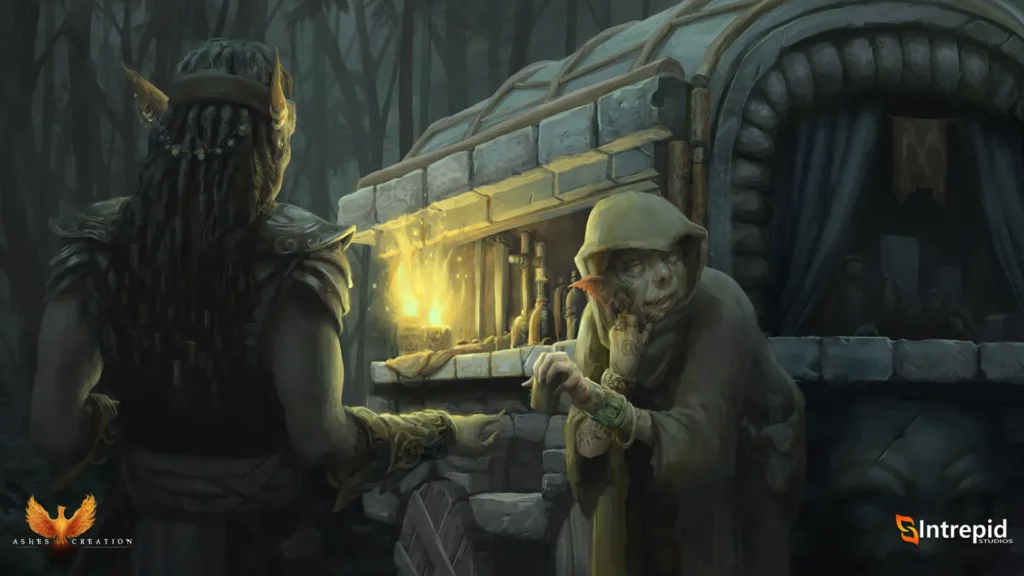
Intrepid pressed forward, continuing to demonstrate progress. In December, it announced a move to Unreal Engine 5, the technology used to build and render the game. The studio presented the change as an opportunity to improve development and the world’s visual quality.
Alongside that work, the shop gave supporters regular opportunities to spend. Packages combined testing access, future benefits and cosmetic items: appearances for characters, mounts or buildings that changed their looks rather than improving their abilities.
The community guide Ashes 101 documented tiers including a $250 Voyager package and a $375 Voyager Plus package. Monthly selections changed, and qualifying customers could buy additional cosmetics individually. A supporter could therefore keep making purchases while waiting for the systems in which to use them to come online. Even an enthusiastic supporter could struggle to assess an item whose eventual use depended on unfinished systems.
Paid Alpha Access Reopens the Argument
The debate intensified again in 2024.
In January, Intrepid stopped selling its existing pre-order packages, following earlier statements about reaching its desired Alpha Two population. Later that year, new offers brought paid access back into the discussion.
In August, the studio announced entry waves priced at $120, $110 and $100. After criticism, it expanded the bundles to include both beta stages, a month’s subscription at launch and $15 in cosmetic currency. It added benefits rather than reducing the prices.
Intrepid cited server and content-delivery costs and explicitly warned people against buying if they expected a completed game. Alpha Two’s phased schedule began with weekend testing in October 2024, with longer periods of availability planned afterwards.
The warning mattered. These were purchases of participation in testing, and some customers wanted exactly that. They could explore an unfinished world, give feedback and help support development. Others questioned paying substantial sums for limited content and progress that might later be wiped.
By this point, however, the argument concerned more than the value of an individual package. Seven years had passed since the Kickstarter campaign began. While there was enough development to sustain interest, the experience remained provisional.
This exposed a flaw common to other crowdfunded campaigns: supporters could supply money, feedback and publicity without gaining formal authority over management or schedules. Their involvement could be substantial while their influence remained dependent on the studio’s willingness to listen.
Was Ashes of Creation Ready for Steam?
In November 2025, Intrepid announced that Ashes of Creation would enter Steam Early Access the following month. The move surprised parts of its existing audience because the game was still in alpha.
Contemporary reporting on reactions recorded fears that a wider audience would judge the unfinished build harshly, leading some supporters to urge Sharif to reconsider. Others speculated that the release reflected a need for money, a suggestion that had more than the ring of truth.
Sharif argued that Steam was a necessary next step: it would expand the audience and bring more players into the testing process. He acknowledged the risk but maintained that development would continue.
However, the disagreement exposed a growing problem with expectations. Long-standing backers had followed years of explanations about what was missing and what would come later. The Steam launch would bring customers who knew far less about that history and could assess only the product in front of them.
Public discussion was already divided over the reliability of development presentations. Online streamer Narc, who had publicly defended the game, questioned whether demonstrations accurately conveyed progress; another streamer Pirate Software disputed his account using his own experience of the alpha.
These were warning signs about confidence, readiness and communication. But the release was approaching amid an argument about whether the visible game justified the expectations surrounding it.
What the Steam Release Actually Delivered
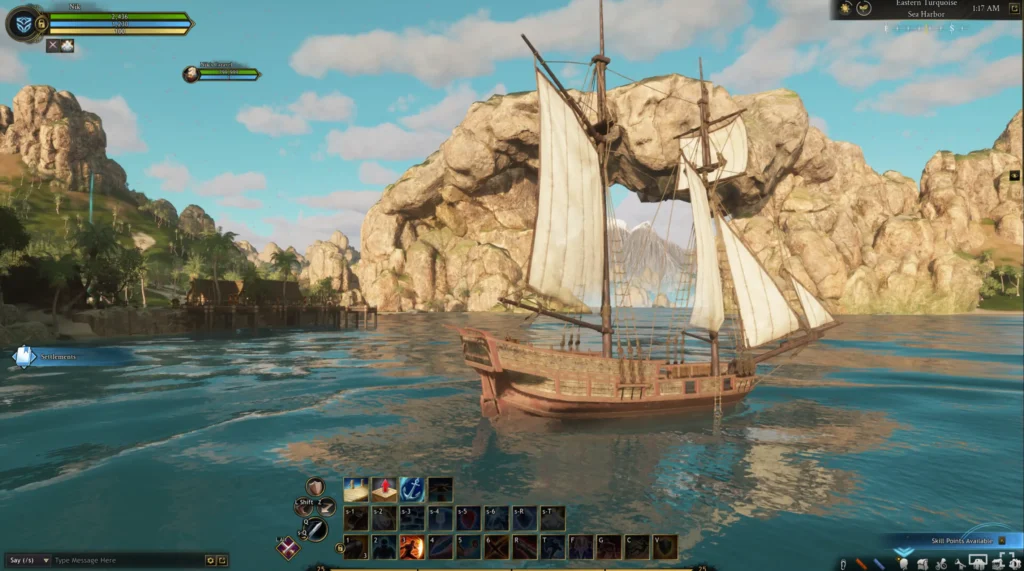
On 11 December, the debate moved into the open, when the game was finally launched on Steam – but only in Alpha Two.
The launch attracted considerable attention. Massively Overpowered recorded a first-day peak of 25,950 concurrent Steam players and a strong position in the platform’s sales rankings.
However, it also reported technical difficulties, including problems accessing the website, linking accounts and entering the game. On the whole, reactions were mixed: some accepted the limitations of Alpha Two, while others questioned its scope and readiness.
MMORPG.com’s Steven Weber offered a detailed January review, based on nearly 70 hours of playtime. He found enjoyable group play alongside repetitive progression, uneven questing and widespread bugs. More fundamentally, the interlocking systems remained incomplete or insufficiently connected, and the settlement system had not produced the transformative effects he expected.
His assessment acknowledged a level of genuine achievement. Getting a game of this scale into a playable state mattered. Yet enjoyable moments did not resolve the gap between the functioning build and its larger promise – and the presence of a fully working cosmetic shop sharpened that contrast.
Meanwhile, whispers about the business itself were getting louder. In December, reporting identified a lawsuit from cloud-services provider Sada Systems seeking approximately $850,000 in allegedly unpaid fees.
Sharif dismissed concerns about the dispute, characterising contract disagreements as routine. He said roughly $800,000 represented a week’s operating expenditure for the studio. That response also revealed the scale of the continuing financial commitment behind this as-yet unfinished game.
Reassurance, Then Closure
January 2026 brought further reasons for concern, with reports of layoffs in the pipeline. Sharif confirmed nine employees from a team of about 250 had been affected by ‘targeted adjustments’ but he denied that this reflected the project’s health or future.
On 29 January, a director’s letter acknowledged problems including bots, cheating, bugs and performance, while reaffirming the team’s commitment, and a development broadcast was scheduled for February.
Two days later, the bombshell exploded.
In a letter, Sharif publicly announced his resignation. He said control had shifted away from him and the board had directed actions he could not ethically support. His account described subsequent leadership departures and a decision to proceed with mass layoffs.
California’s WARN reporting recorded a permanent closure affecting 123 employees. Former communications director Margaret Krohn said staff would not receive final pay, accrued holiday payouts and other compensation owed. Her public account described employees trying to understand an abrupt studio-wide layoff.
The game was over… almost as soon as it began.
Behind the Scenes: Debt and Changing Control
The closure of the studio and the ensuing fallout brought a different history into public view. The public version of a wealthy founder backing a passion project was now accompanied by allegations about lenders, ownership and a struggle over Intrepid’s assets.
A March court order, summarising Sharif’s complaint, described external borrowing beginning in 2017 and a $6 million CommerceWest Bank loan in 2020. It also described subsequent lending from Robert Dawson, a financier who, according to Sharif’s account, became Intrepid’s majority shareholder.
The same account records Dawson becoming chairman and his associate Ryan Ogden becoming CFO in September 2024. Dawson’s debt was secured against company assets, including intellectual property.
According to Sharif’s account, these lenders had acquired substantial ownership and formal influence over the board, complicating the public image of a project financed and controlled by its founder.
Allegations of Aggressive Lending
Sharif later alleged that creditors used financing pressure to increase their control over the company, then attempted to transfer assets through an improper foreclosure process into an affiliated company, TFE Games Holdings. It must be acknowledged, however, that these are allegations presented by Sharif, rather than a final judicial reconstruction of what happened.
The mechanism nevertheless helps explain what was at stake. A lender with security over assets has rights different from those of a customer buying testing access. A shareholder with board influence can affect management decisions. The struggle appeared to concern the organisation and the intellectual property required to continue development.
Opposing accounts challenged Sharif’s own conduct. Investor Jason Caramanis, whose background included multi-level marketing business Jeunesse, accused him of financial misconduct and disputed his representations about personal funding. His allegations were publicised through creator NefasQS. Sharif subsequently denied misusing crowdfunding money and challenged the interpretation of financial records circulated online.
Personal cash contributions, guarantees, company borrowing and customer revenue are certainly different things. A founder can accept substantial personal risk without funding every expense from existing wealth; establishing the precise balance requires more than promotional statements or selected accounting records.
At the present time, it’s impossible to determine which of these warring narratives is correct. The court proceedings have continued to address the assets left behind. On 27 August 2026, the federal court appointed Howard B. Grobstein as a limited receiver. His remit included safeguarding intellectual property, examining relevant secured debt and overseeing any foreclosure sale.
Although this was effectively the full stop for Intrepid Studios, its closure did nothing to settle the broader dispute over who was responsible for the collapse.
An Unfinished World
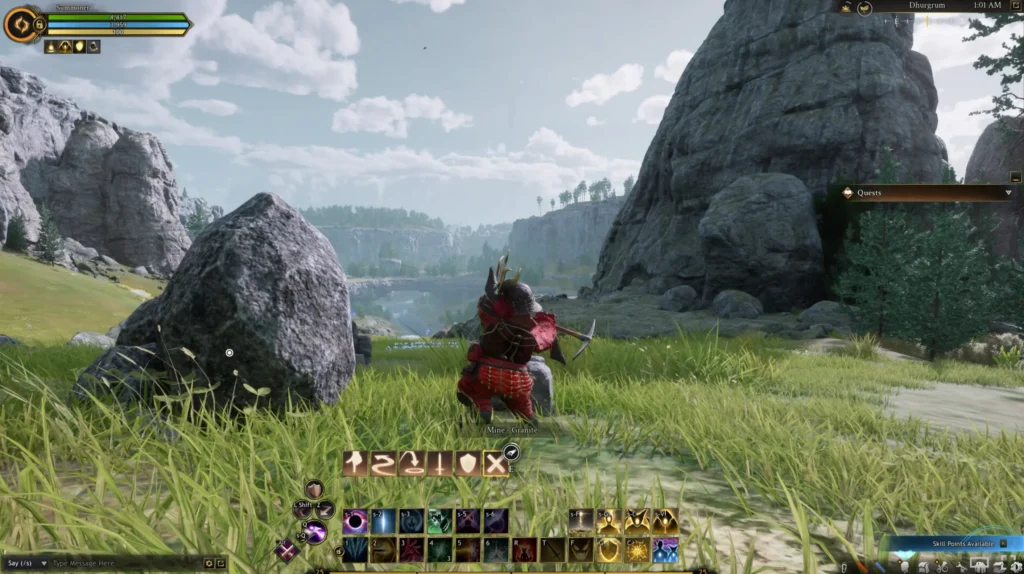
Seen from outside, Ashes of Creation was a long sequence of promises, demonstrations, setbacks and renewed expectations. Supporters saw real development, and the promise of a truly satisfying MMORPG. However, the warning signs were arguably there from the beginning.
Perhaps it was too romantic a notion: that a mega-rich superfan without a background in gaming could create a top-tier title with dazzling mechanics that would redefine the genre.
The parallels with Star Citizen and Build A Rocket Boy are striking, but the outcomes differ. Ashes of Creation reached a wider paying audience while still in testing, then lost the studio building it before its larger ambitions could be realised.
The litigation may establish more about individual responsibility.
For employees and supporters, the immediate outcome is already clear: years of work and anticipation produced a playable game, but the world they expected is simply that: ashes.