
Decoding the digital age
The Great Game of Monetization
We lift the hood on the theories, techniques and technologies that get you playing and keep you spending in free-to-play games.

Game business
The Great Game of Monetization
How game monetization uses behavioural economics, dopamine design and adaptive AI to transform entertainment into a laboratory for human conditioning.
Written by James Richards | Edited by Peter Franks
Once, you bought a game and played it. Now, the game plays you.
For most of gaming’s history, the economics were straightforward: a one-off exchange. Developers spent years creating a title, players bought it, and the financial relationship ended. The incentives aligned neatly. Studios needed to make good games because the only path to revenue was convincing someone to purchase the box. And if a game was a cultural phenomenon (such as Pokémon or Halo ), it was because the game earned it, not because a retention funnel was quietly shepherding the player from one dopamine spike to the next.
But with the rise of smartphones in the early 2010s, a quiet revolution began. A new generation of games including Candy Crush Saga, Clash of Clans, DragonVale, and FarmVille did not simply use the mobile platform as a new way to distribute games. Instead, they used it as a behavioural monitoring and delivery system: a way of measuring how people played, tracking their habits in real time, and feeding those insights back into design.
The phone became not just a place to download a game, but a tool for shaping and responding to player behaviour, moment by moment. In this sense, these games reimagined the relationship between entertainment and revenue by reframing the player not as a customer, but as a recurring data point.
The Rise of Play for Free
The new sales pitch was deceptively generous: play for free. But the concept of ‘free’ came with conditions that were invisible at first glance. Instead of paying upfront, players paid with something else - time, patience, and ultimately, attention that could be steered toward spending.
Mechanics that looked harmless on the surface, for example, energy bars that ran out, timers that slowed progress, cooldowns that forced waiting, and currency gates that blocked upgrades, were not simply parts of the game. They were strategic points of friction designed to interrupt momentum. Each pause was not an accident of pacing; it was a moment calibrated to make players consider speeding things up with a small purchase.
What made this approach so effective was how seamlessly these friction points blended into the experience. As levels got harder, as timers stretched, and as progress began to feel just slightly out of reach, players interpreted the slowdown as a natural increase in challenge. In reality, these changes were deliberately engineered to create micro-moments of frustration. A failed level by a tiny margin, a resource that runs out just before an upgrade, a cooldown that lasts a few seconds too long - all of them acted as subtle nudges, steering players toward the Buy Now button without them ever feeling overtly manipulated.
The brilliance, or cynicism, depending on your view, was that the system worked precisely because it never declared itself. The friction felt like part of the game. The monetization was woven invisibly into the fabric of play.
Behind the scenes, studios such as King and Supercell industrialised the behavioural model. Their internal analytics infrastructures rivalled those of social-media giants. Designers did not simply make games; they tuned conversion funnels. Everything was logged, graphed and optimised, from the ideal number of seconds before a prompt appears, to the emotional temperature of a player after a loss, to the colour of a button that yields the highest conversion on a £1.99 booster.
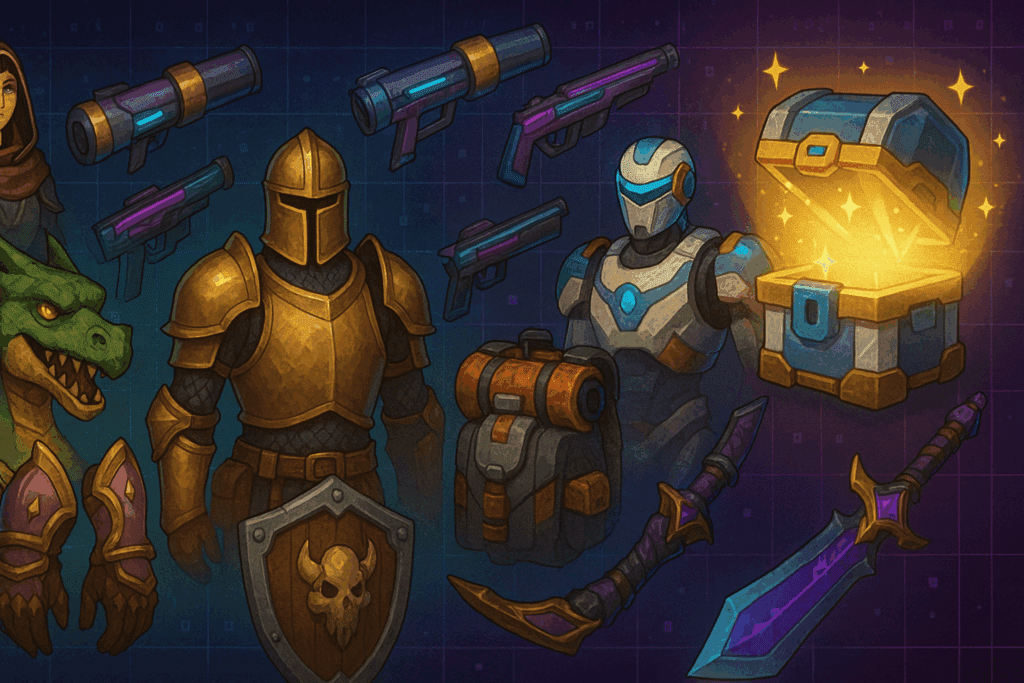
By the time Fortnite arrived in 2017, free-to-play economics had fully broken into the mainstream. Skins (cosmetic overlays that change a character or weapon’s appearance in a game) were no longer just decoration; they became a form of social performance, a way to signal identity inside the game’s permanent festival of movement and colour. Seasonal battle passes created predictable, subscription-like revenue cycles, encouraging players to check in weekly, complete challenges and avoid missing out. Time-limited events introduced digital scarcity, turning certain skins and weapons into status symbols precisely because they would never return. At scale, these mechanics created something larger than a successful game. Fortnite functioned as a behavioural economy wrapped in neon, a world where play, identity, social status and spending blurred into a single loop.
Free-to-play games did not merely succeed; they rewired the industry’s mental model. How do we make a great game remained one question among many. The more urgent commercial question became: how do we build systems that keep people paying without making them feel like they are being charged?
What began as clever design evolved into a self-learning, revenue-optimising organism.
The Skinner Box Goes Mainstream
To understand the psychological architecture of modern games, we must return to B. F. Skinner and a small box filled with pigeons.
In the 1940s, Skinner, a Harvard psychologist and one of the founders of behaviourism, studied how animals learn through rewards and consequences. In his experiments, pigeons placed in a small operant-conditioning box received food either on a predictable pattern or at random intervals. The pigeons given food on an unpredictable basis pecked the lever far more persistently than those fed on a fixed schedule. The uncertainty itself was motivating. This variable-ratio reward schedule became a cornerstone of behavioural science and, decades later, the backbone of digital monetization.
Long before mobile games existed, the casino industry had already built entire systems around this principle, the most famous incarnation being the slot machine. A lever, spinning reels, flashing lights and the ever-present possibility of a jackpot combined to form a behavioural loop that required almost no updating for nearly a century. The psychology underneath remained constant; humans, like pigeons, are naturally drawn to the tension of an unpredictable reward, even when logic suggests we should walk away.
In the late 2000s and early 2010s, digital games absorbed this logic wholesale, based around a highly engineered compulsion loop: action → anticipation → reward → micro-euphoria → reset.
Humans, like pigeons, are naturally drawn to the tension of an unpredictable reward, even when logic suggests we should walk away.
Every aspect of game presentation was increasingly being engineered to reinforce this loop. Sound effects were tuned to trigger recognition. Colour palettes distinguished rarity at a glance. Controller vibrations punctuated dramatic moments. Rarity animations amplified the excitement of a reward reveal. The chime that plays when you obtain an epic item is not simply decoration. It is a behavioural signal designed to encourage you to seek that feeling again.
As players repeat these cycles, reinforced cues begin to shape their habits. The tasks required to earn rewards start out as deliberate choices, but gradually become part of a routine the player follows almost automatically. Each small unlock delivers a predictable lift in mood, which encourages the cycle to continue. That consistency matters, because once the behaviour becomes habitual, studios can track how players move through the loop, analyse those patterns and fine-tune the experience with increasing precision.
The most significant shift is not the loop itself but the data that surrounds it. Skinner had no way of knowing which pigeon was most easily conditioned or how individual behaviour varied from one experiment to the next. Modern studios, however, can track these differences in extraordinary detail. They know which players hesitate before making a purchase, which ones become more impulsive during a losing streak, and which ones reliably respond to timed discounts or social prompts. Every stage of the loop produces data points that can be captured, analysed and fed back into design. The compulsion loop does not just operate in the background. It now runs with full telemetry, allowing the system to learn from player behaviour and adjust itself accordingly.
Fun became a laboratory for predicting human weakness.

The Dopamine Economy
What began in games soon became the operating logic of the wider digital economy. The behavioural techniques refined in titles like Clash of Clans did not stay within gaming. They reappeared in Facebook’s endless feed, where scrolling felt less like navigation and more like a series of small gambles, each of which could provide a ‘pay-out’. Across the internet, variable-reward systems that originated in game design began to shape how people consumed news, entertainment and social interaction.
Many of the device gestures we now take for granted mirror the dynamics of chance. The mechanic of ‘pull-to-refresh’ (used in mail apps and social media platforms) echoes the movement of a slot machine handle. Infinite scroll (present in Instagram, X, and TikTok) functions as a behavioural treadmill that removes natural stopping points. Notifications (ubiquitous across digital platforms, especially mobile) act as tiny rewards, each one exploiting the anticipation of what might be waiting. Even the simple thrill of receiving a ‘like’ draws on the same neural circuits that light up when a bonus button flashes on a fruit machine.
Behavioural economics gave designers the language to describe and formalise these techniques. Concepts such as loss aversion, scarcity bias and anchoring moved from academic papers into UX guidelines and product roadmaps. Commerce followed the same trajectory. Amazon now uses scarcity banners and countdown deals to heighten urgency. Uber’s surge pricing subtly conditions riders to accept fluctuating costs. Even supermarket apps employ checkout timers or personalised nudges to keep customers moving quickly through purchase decisions.
In this landscape, money is no longer the only valuable commodity. Attention itself becomes the primary resource, harvested through pleasure, friction, novelty and unpredictability. A small dopamine spike becomes the new form of payment.
The game industry did not invent the attention economy. It simply mastered its mechanics sooner than everyone else.
Whale, Dolphin or Minnow?
Free-to-play ecosystems rely on a striking economic imbalance. A small minority of players generate the majority of the revenue, while everyone else occupies the world that makes the game feel alive.
‘Whales’, the top 1 to 5 percent of players, often contribute more than half the total income for major titles. ‘Dolphins’, who make smaller but consistent purchases, form a reliable middle tier. ‘Minnows’, the largest group by far, never spend at all but provide essential social density and the illusion of a thriving community.
This uneven economy works because the underlying design taps into psychological tendencies that are broadly shared. The sunk-cost fallacy encourages players to keep investing simply because they already have. Social comparison drives interest in skins, emotes and badges, turning cosmetic items into signals of competence, commitment and belonging.
Limited-time events heighten urgency by leaning on fear of missing out, while seasonal passes divide the year into predictable engagement cycles. Rarity tiers add another layer by turning certain skins and objects into aspirational items that confer status.
What is striking is that most players recognise this structure. Many understand the economics, the pressure points and the nudge architecture, yet the systems still succeed. Awareness does not neutralise behavioural design any more than knowing the mechanics of a magic trick breaks its effect.
Behavioural economics does not depend on deception. It depends on the cognitive shortcuts that shape human decision-making, even when we know they are there.
A more unusual version of this dynamic can be seen in Star Citizen’s billion-dollar funding model, where virtual spacecraft, community status and accumulated commitment have financed development for almost 14 years.
Adaptive Pricing and Personalised Fairness
If free-to-play models changed the economic foundations of gaming, the arrival of AI changed their ethical landscape. What began as a question of when players might spend became a question of how individual players could be steered toward spending at the precise moment they were most likely to give in.
Adaptive pricing represents the clearest expression of this shift. Instead of offering every player the same £7.99 bundle or £1.99 time-saver, machine-learning systems adjust the price, timing and presentation of offers for each individual. The storefront becomes a reflection of the player’s emotional patterns, their moments of hesitation, their history of purchases and even their social habits inside the game.
Two players might sit next to each other, playing the same game on identical devices, yet see completely different prices for the same virtual item. One might be offered a discount during a losing streak, anticipating a moment of frustration. The other might see a higher price because the system recognises a willingness to pay more. Outwardly, the store looks stable. In reality, it is continuously recalibrating itself around every player.
Publishers often describe this as personalised fairness, the idea that variable pricing allows more people to participate at the level they can afford. The framing is sympathetic, almost generous. But in practice it functions as behavioural arbitrage: an automated system that identifies the maximum amount each player is psychologically willing to spend, then prices accordingly.
In this new landscape, fairness becomes a variable rather than a principle. The cost of a digital sword is no longer linked to production value, which is effectively zero, but to the inferred psychological elasticity of the person holding the controller.
Adaptive pricing represents a profound shift. Monetization no longer responds to demand. It actively shapes it, bending the in-game economy around each player and optimising not for enjoyment but for conversion.
The Ethics of the Hook
All of this leads to a difficult and increasingly unavoidable question: at what point does design cross the line from persuasion into manipulation, and who is responsible for defining where that line sits?
As free-to-play mechanics spread, governments began to treat digital games not just as entertainment, but as environments engineered to influence behaviour. The result has been a wide and sometimes contradictory set of regulatory responses, each reflecting a different national view of consumer protection, youth wellbeing and the appropriate limits of commercial pressure.
Japan was one of the earliest countries to intervene, after several high-profile cases in which children spent large sums chasing rare items in so-called ‘kompu gacha’ games. Such models were made illegal in 2012, and developers are now required to disclose the probability rates of loot boxes, and regulators can step in if the systems are judged coercive. The emphasis is on transparency: companies may use these mechanics, but players should at least know what they are engaging with.
Belgium adopted a more uncompromising position. In 2018, its Gaming Commission ruled that certain loot-box systems qualified as gambling under national law. This forced companies such as Blizzard and EA to alter or remove these mechanics in the country. Belgium’s stance is direct: if a design resembles gambling, it should be regulated like gambling. That distinction separates conventional game monetisation from the regulated iGaming industry, where real-money wagering is the product itself rather than an adjacent mechanic.
The Netherlands followed a similar path, though with more legal back and forth. Dutch courts initially supported restrictions on loot boxes in FIFA, before higher courts overturned parts of the ruling. Even so, the debate helped galvanise wider European scrutiny of monetization practices.
Monetization regulation
A spectrum of global responses
Countries respond to behavioural monetization in sharply different ways, from transparency rules to gambling classification and youth protections.
Transparency-focused rules
Strict gambling regulation
Behavioural and youth controls
Fragmented or slow oversight
Monetization regulation
| Japan | Odds disclosure, kompu gacha banned |
|---|---|
| Netherlands | Court-driven debate on loot boxes |
| UK | Parliamentary scrutiny, regulator proposals |
| Belgium | Some loot boxes treated as gambling |
| China | Playtime limits, age-based controls |
| United States | State-based actions, FTC cases |
Each jurisdiction blends different regulator tools from transparency mandates and gambling classifications to youth-protection rules and dark-pattern enforcement (positions are indicative rather than exact)
China took a different approach. Worried about rising rates of gaming addiction among minors, regulators introduced strict playtime limits, real-name registration and rules governing the distribution of randomised rewards. Companies must disclose reward odds and avoid designs deemed overly stimulating or exploitative.
In the UK, parliamentary committees have debated whether FIFA Ultimate Team should fall under gambling regulations and whether children can meaningfully consent to systems intentionally designed to trigger impulsive behaviour. The discussion has broadened into calls for a dedicated regulator to oversee monetization practices across interactive media.
The United States has been slower to act, partly due to the complexity of federal and state oversight. Even so, momentum is building. Bills have been introduced to restrict loot boxes for minors, and several states have pursued legal action against mobile games that use deceptive subscription flows. The Federal Trade Commission has already fined companies for employing dark patterns that make cancellation difficult or lead users into unintended purchases.
Taken together, these initiatives show a global recognition that monetization-heavy design is no longer just a business strategy. It has become an ethical frontier. Industry arguments that purchases are optional carry less weight when those purchases sit inside systems engineered to bypass rational decision-making.
The Behavioural Playbook Expands
By the late 2010s, the psychological machinery perfected inside games had spread across the entire digital landscape. Techniques originally designed to shape short bursts of player behaviour became the organising principles of the modern attention economy.
Streaming platforms were early adopters. Netflix’s autoplay feature, which starts the next episode automatically, is designed to remove the moment of choice where a viewer might stop. Credits shrink, recommendations fill the screen and countdown timers create a sense of continuous movement. Even the ambient hum of the interface encourages a posture of passive continuation rather than intentional decision-making. The goal is simple: reduce friction, extend viewing and keep people inside the platform for as long as possible.
TikTok expanded these ideas with remarkable intensity. Its infinite vertical scroll is a pure variable-reward system, where each swipe yields a new and unpredictable outcome. The algorithm reads micro-signals such as pauses, replays and skips, then adjusts the feed in real time. This creates a personalised reward schedule that refreshes every few seconds, tuned to mood, attention and emotional state. The result is less a social feed than a constantly adapting behavioural loop.
Retail platforms rely on many of the same principles. Amazon uses scarcity banners, time-limited offers and contrasting price displays to encourage quick decisions. Grocery and delivery apps deploy personalised deals and countdown timers to accelerate checkout, often aligned with predictable hunger windows or daily routines.
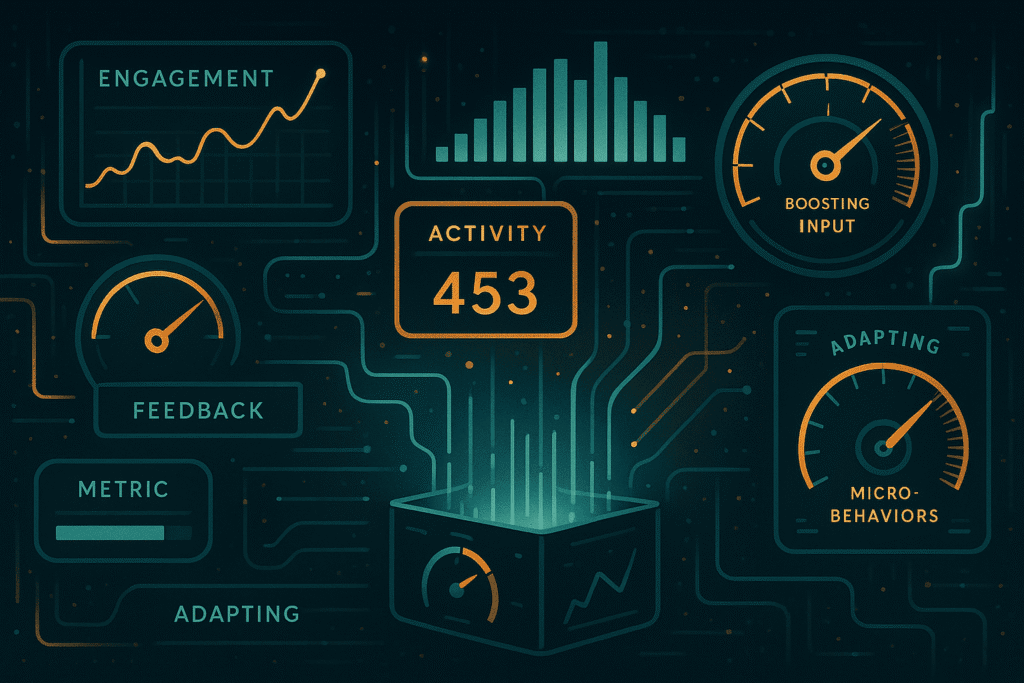
By this stage, the behavioural playbook had expanded far beyond its origins. It became the default logic of digital interfaces, which now prioritise boosting engagement, reducing friction, providing individualised feedback to developers, and adapting continuously to micro-behaviours. In this sense, engagement was no longer a metric. It became the operating principle of digital services.
The compulsion loop, once confined to games, became the interface language of the modern economy.
Beyond Addiction: The Future of Fair Play
Despite its more troubling applications, behavioural design is not inherently exploitative. The same psychological principles that make games compulsive can also make them supportive, reflective or restorative. The challenge is not the technology itself but the incentives that shape how it is used.
A different trajectory is beginning to emerge. Imagine systems that recognise mounting frustration and gently prompt a break rather than pushing players to continue. Imagine difficulty levels that adjust to prevent exhaustion rather than encourage repeated failure. Imagine games that reward pacing, curiosity and emotional balance instead of constant acceleration. These ideas may seem idealistic, but prototypes already exist.
Several indie titles offer early examples. Kind Words turns interaction into a gentle exchange of supportive messages. Sky: Children of the Light emphasises cooperation, exploration and shared moments rather than competitive pressure. In each case, behavioural design is present, but it is channelled toward calm, connection and intention rather than compulsion.
The larger question is no longer whether behavioural design will shape the future of games. It already does. The issue is which values will guide its evolution. AI amplifies every design choice, making both the risks and the opportunities larger. The same algorithms that scale manipulation can also scale healthier forms of engagement, if industry incentives shift in that direction.
The great game of monetization began as a marketing experiment and grew into an operating system for digital capitalism. Yet it does not have to stay on the same course. If developers can master the art of shaping desire, they may also learn the more demanding art of shaping reflection, building systems that serve players as much as they capture their attention.
In a world where attention is one of the most contested commodities, the next frontier of game design may not be about maximising engagement but redefining what engagement should be.